








 Português
  Español
  简体中文
简体中文 

 Unverified company


 Email
Email
 Facebook
 Whatsapp
 Twitter
 Linkedin
Description
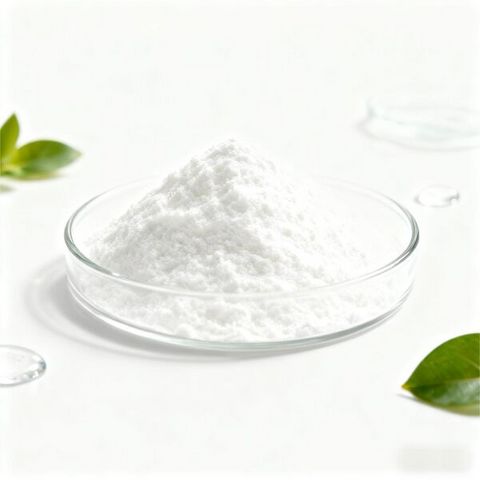
Packaging specifications: 20 kg/bag (drum) Main uses: Microcrystalline cellulose is widely used in pharmaceutical preparations, primarily as a diluent and binder in oral tablets and capsules. It can be used in both wet granulation and dry direct compression. It also has certain lubricating and disintegrant properties, making it very useful in tablet manufacturing. The product characteristics are divided into three types: ordinary type, wet granulation type, and direct compression type. The ordinary type is model B1, with the following characteristics: 120-mesh sieve residue ≤5%, 200-mesh sieve residue ≤50%, loss on drying ≤5.0%, bulk density 0.25-0.37g/cm³, and average particle size 40-60μm. The wet granulation type is model 101, with the following characteristics: 60-mesh sieve residue ≤1%, 200-mesh sieve residue ≤30%, loss on drying ≤5.0%, bulk density 0.25-0.37g/cm³, and average particle size 40-60μm. The direct compression type is model 102, with the following characteristics: 60-mesh sieve residue ≤8%, 200-mesh sieve residue ≥45%, loss on drying ≤5.0%, bulk density 0.25-0.37g/cm³, and average particle size 70-100μm. Microcrystalline cellulose 101 is suitable for tableting using all compression methods, especially wet granulation, rotary tableting, and pelleting, and has good compressibility. Microcrystalline cellulose 102 has a larger particle size and is suitable for direct compression tableting, exhibiting good flowability and compressibility.
- microcrystalline cellulose
Production Capacity:
Not informed
Delivery Timeframe:
Not informed
Incoterms:
Not informedPackaging Details:
Not informed
More about
SHANDONG BESTY PHARMA CO., LTD.

50-100
Employees

200K - 500K
Sales volume (USD)

40%
% Export sales
Year
Established
Business type
- Industry / Manufacturer
Keywords
- Food ingredients
Contact and location
-
 Ruby ********
-
+86 1********
-
济宁 / 山东 | China
 Ruby ********
 +86 1********
 济宁 / 山东 | China


